Table of contents
Quick Summary for Busy Teams
If you scale spend with shaky creatives, you do not “test faster”. You just pay more to learn the same lesson.
This guide is a buyer’s-friendly framework to run an audit before you scale, so you can protect performance and remove avoidable waste. It is written the way I would explain it to a client in a first working session: plain English, clear checkpoints, and the minimum admin required to get meaningful insights.
What you’ll get by the end
- A short list of the creative opportunities worth fixing first
- A consistent way to judge new iterations (so you stop debating opinions)
- A simple reporting rhythm that keeps everyone aligned
One line I repeat to teams: the goal is not prettier work, it is clearer decisions.
What This Audit is (and What It Isn’t)
A creative audit is a structured review of what is already running (and what is about to run) to see where performance is leaking.
It is not a full brand repositioning exercise, and it is not a “tear everything up” moment. It is a controlled process that helps you spot patterns: what hooks keep winning, what formats consistently lose, and where friction appears in the journey.
A proper audit answers four questions:
- What is working, and why?
- What is underperforming, and is it fixable?
- What is missing from the creative mix?
- What should we test next, in what order?
You do not need a massive deck. You need a clear method and honest notes.
Where Performance Usually Breaks Before Scale
This is the bit most teams skip. They see one decent week, assume success, and scale. Then performance drops and everyone panics.
The breakpoints are usually predictable:
Message clarity
The value prop sounds clever but not obvious. Viewers do not understand the “why now” quickly enough.
Format mismatch by platform
A format that works in one place underperforms elsewhere because pacing and context are different. Your platform choice should influence structure, not just cropping.
Weak proof
Claims are not backed up. That includes vague “best in class” statements with no demonstration.
Creative fatigue
The same angle is repeated too long. The audience stops reacting.
Inconsistent expectations
A promise made in paid creative does not match what the viewer sees next. That is where conversion falls apart.
At Kurve, we look for these patterns first because they produce fast, repeatable insights without overcomplicating the review.
The Creative Audit Workflow We Use With Clients
Choose Your Review Window
Before you do anything clever, choose a fixed window (often 14–30 days). This stops the team cherry-picking examples.
Now set a clear filter: “Only include assets with enough spend or impressions to be meaningful.” That prevents you overreacting to noise.
Build a tidy creative inventory
This is where teams usually suffer because nobody owns the library.
We create one inventory that includes:
-
A single hero screenshot per variation
-
The opening seconds (or opening frame)
-
The full caption or on-screen copy
-
The landing destination
That inventory becomes the foundation for creative reporting and repeatability.
The “three-bucket” scoring method
We score each asset using three buckets:
- Hook strength (does it earn attention fast?)
- Clarity (does it explain value in plain language?)
- Proof (does it show credible evidence?)
This approach removes endless subjective debate. It also makes it easier for a client to approve changes quickly.
Include the context that matters
One asset can look “good” and still be wrong for the audience.
So we add context once:
- Audience Segment
- Objective (Installs, Trials, Purchases)
- Format Type and Placement
That is enough to get reliable insights without drowning in spreadsheets.
The tools question, answered honestly
You do not need a fancy stack to start, but you do need consistency.
If you are investing in creative reporting tools, look for:
- Easy tagging and search
- Fast comparisons by angle and hook
- Clean export options for stakeholders
(Your creative team will thank you for it.)
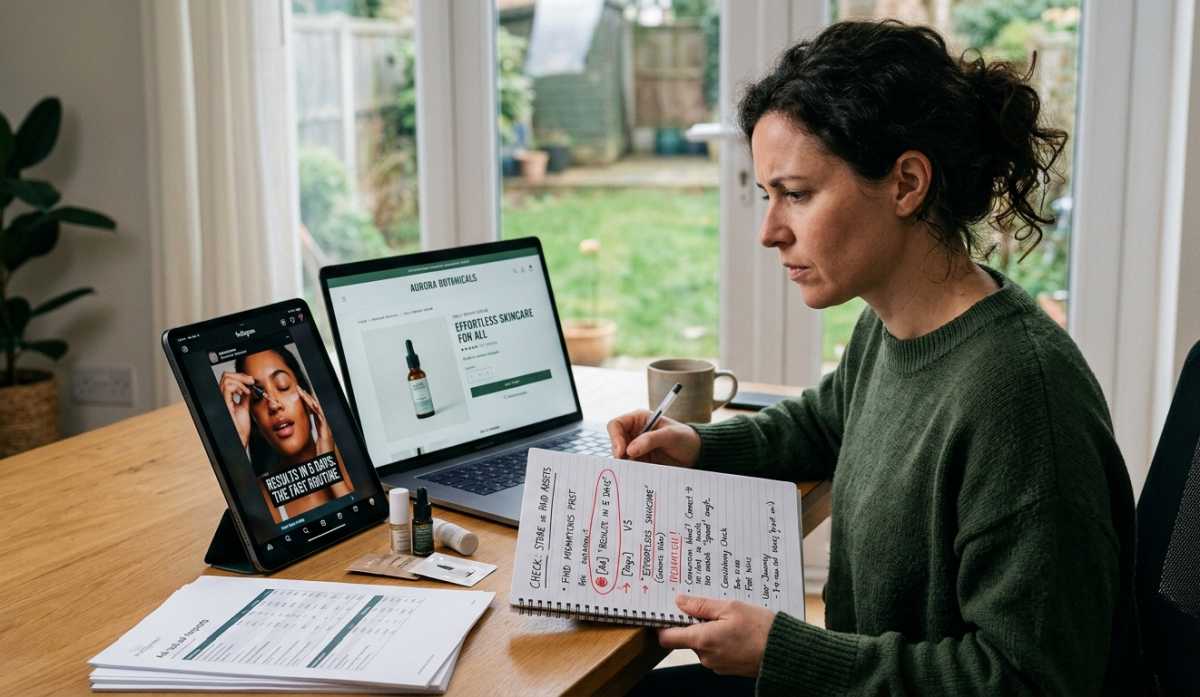
What to Check: Store-facing Assets vs Paid Assets
Find the Mismatches First
The fastest wins come from mismatches: the viewer sees one thing, then lands on another.
This is where the store experience matters. If your top creative angle is “speed”, but the first thing a user sees is a slow, generic value statement, you are bleeding conversion.
There are a few specific checks that matter:
- App preview alignment: does it reinforce the winning angle or distract?
- App icon clarity: does it look trustworthy and recognisable at small sizes?
- Screenshots consistency: do they match the same promise and tone?
If you want a practical reference on visual elements that impact conversion, link your internal review habit to Kurve’s guidance on icon optimisation and creative iteration (useful when you’re tightening the basics before scaling).
Now zoom out and check your keyword strategy once: if the promise in creative suggests one intent but your keyword focus suggests another, you are building confusion into your funnel. That single keyword mismatch can undermine otherwise solid work.
Paid creative checks that prevent waste
For paid, your goal is repeatability.
We check:
- First 2 seconds clarity
- Proof within the first third of the asset
- Whether the call-to-action is consistent
- Whether the creative asset is easy to version
We also review one competitive snapshot. Not to copy, but to understand category norms and gaps. This is where competitors' creative can reveal what the audience is used to seeing, and where you can differentiate with more credible proof.
A note on brand: consistency matters, but not at the expense of clarity. A strong creative system protects the brand while still letting performance drive iteration.
How to Turn Findings Into a Clean Action Plan
This is where most audits fail: teams generate observations, then do nothing.
A useful action plan has three parts:
1) Fix now (no new production)
Copy tweaks, hook re-orders, tighter proof, or better framing.
2) Build next (small batch)
Two to four new angles, each with versions for the same platform placements.
3) Learn loop (repeatable rhythm)
One weekly check-in, one monthly mini-review, and a simple review log so you can track what changed and why.
If you are scaling, the only thing that matters is whether the system keeps improving. Your goal is not one viral hit. Your goal is reliable winners you can deploy across placements.
When we work with a client, the best outcomes happen when we keep decision-making lean and give the team a clear “definition of done”.
FAQ
What is creative audit?
A creative audit is a structured review that evaluates messaging, proof, format fit, and consistency across placements so you can improve results before scaling spend.
Can ChatGPT do an app audit?
ChatGPT can support parts of an audit by helping structure a checklist, summarise patterns from notes, and draft improvement ideas. It cannot replace real performance data, stakeholder context, or a proper analytics platform review.
What is an app audit?
An app audit is a broader review of performance and experience across product, acquisition, retention, and store-facing assets. A creative-focused audit looks specifically at messaging and creative effectiveness.
What are the 4 types of audits?
Common types include financial audits, operational audits, compliance audits, and performance audits. In marketing, a creative performance audit focuses on how assets influence outcomes and where improvements should be prioritised.
For a clear baseline on ad policies and disclosure expectations, it is worth keeping Google’s advertising policies guidance bookmarked as part of your pre-scale checks.