Table of content
- Quick Summary (What You’ll Build)
- The Buyer Mindset: What You’re Really Selecting for
- How to Build a Scoring Sheet You Can Run Every Month
- Where to Source Candidates Without Wasting Days
- Influencers: Credibility, Context, and Conversion Intent
- Create Your Workflow Before You Message Anyone
- Social Influencer Checks and Brand Safety Basics
- Influencer Marketing Tools That Speed Up Discovery
- Marketing Systems: Tracking, Notes, and Handover
- The Outreach Message That Gets Replies
- Turning Research Into One Repeatable Campaign
- FAQ
Quick Summary (What You’ll Build)
This guide is for the moment before you start outreach. If you rush past the research, you end up paying twice: once in time, once in performance.
Here is what you’ll build:
- a candidate pipeline you can repeat
- a simple scoring model for each influencer
- a clean handover so your team can execute quickly
- a shortlist that you can defend to a founder and a finance lead
If you’re new to this channel, the foundations sit in Influencers For Apps and Benefits Of Influencer Marketing. If you’re deciding between creator styles, start with UGC vs Influencer Marketing. For segmentation, Types Of Influencers is the best starting point.
The Buyer Mindset: What You’re Really Selecting for
Most teams say they want “reach”. In practice, they want conversion intent and repeatable delivery.
When I sit with a founder, I ask three blunt questions:
- What behaviour do we want to change?
- What proof will make the user believe us?
- What format will make the message land?
You can absolutely work with big profiles, but performance usually comes from fit, not fame. The top influencer you want is the one who makes your product feel obvious, not the one with the loudest comments.
You’ll also make better decisions if you treat this like a purchasing problem: you are buying consistency, clarity, and learning. That’s influencer marketing when it is done properly.
One practical point: if you do not define your category and hook, you will struggle to find creators who naturally speak the language of your audience. Tie this work back to positioning using Mobile App Growth Marketing and your brand strategy plan. If you’re doing broader marketing planning, The Ultimate Guide to Effective Mobile App Marketing is still the easiest hub to work from.
How to Build a Scoring Sheet You Can Run Every Month
You don’t need an academic framework. You need something your team can use in ten minutes per profile.
Here is the scoring model I recommend. Give each influencer a 1–5 score:
- Fit: does the audience match your intent?
- Proof: do they demonstrate outcomes, not just opinions?
- Clarity: can they explain quickly and cleanly?
- Trust: do they sound credible without being scripted?
- Delivery: do they post consistently and follow formats?
Then add two yes/no checks:
- Is paid usage possible if a video wins?
- Is there obvious risk to your brand?
That is it.
Now, one place teams get stuck: they “explore” forever, but never cut. You need decision rules. If Fit is below 3, move on. If Trust is below 3, move on. If Delivery is below 3, move on.
The best way to keep this clean is to create a shared doc and enforce one owner who does the final review.
Where to Source Candidates Without Wasting Days
You can find good candidates in three lanes:
- platform-native search
- competitor adjacency
- tool-assisted discovery
If you are relying on scrolling, you will not scale. You need repeatable influencer discovery.
Here’s the loop I use with clients:
- Start with pain-point keywords
- Run influencer search on the platform itself
- Log candidates quickly
- Score them quickly
- Cut quickly
- Repeat weekly
You will run influencer search differently on each platform. TikTok is trend-driven, YouTube is intent-driven, Instagram sits in the middle. This matters because it changes your hook style and your content expectations.
If your programme is TikTok-heavy, use TikTok influencer marketing to align format decisions before you reach out.
You’ll also want a simple database to store candidates. It can be a sheet at the start. The key is consistency.
Influencers: Credibility, Context, and Conversion Intent
Here is the uncomfortable truth: most influencer outreach fails because the brief is vague and the ask is generic.
The creator is looking at your message thinking: “Do they know what they want? Will this be painful? Will they be slow to approve?”
So your selection process should prioritise:
- creators who already speak about the problem
- creators who can show proof in a tight format
- creators who can produce clean work repeatedly
- creators who have the audience you actually want
This is also where brands forget measurement. You can’t scale influencer marketing without basic tracking and a habit of reviewing outcomes.
Pair this stage with customer journey mapping and a simple KPI view from Mobile App KPIs. If you’re tightening funnel performance, boosting conversion is worth skimming so your creative pushes people into the right action.
Create Your Workflow Before You Message Anyone
If you want results, you must create the operating rhythm first. That means:
- who approves copy
- who approves creative
- how fast you respond
- what “done” means
- how you store files and notes
Without that, outreach becomes a mess and your influencer loses trust quickly.
This is where marketing discipline matters. Creator relationships move fast. If your team replies slowly, the opportunity disappears.
A practical tip: draft your creative brief before you contact anyone. It should include:
- the promise (one sentence)
- the proof (what they should show)
- the CTA (what the viewer should do)
- the do-not-say list (compliance and accuracy)
- your usage expectations (organic + paid)
If you’re also planning store-side optimisation, connect this with ASO foundations and A/B testing for listings. That keeps the traffic you drive from leaking at the last step.
Social Influencer Checks and Brand Safety Basics
This is not about paranoia. It is about basic due diligence.
Run quick checks:
- scan recent posts for tone shifts
- check comment quality and audience sentiment
- look for patterns of hidden advertising
- confirm they are not constantly promoting competing products
- confirm they can share simple performance screenshots after posting
This step protects your brand and saves you awkward calls later.
External guidance (non-competitor): use the UK Advertising Standards Authority guidance on disclosure: Recognising ads on social media.
One more check: if a creator makes claims about results, make sure you can stand behind those claims.
Influencer Marketing Tools That Speed Up Discovery
Here is how I frame influencer marketing tools. They are useful when:
- you want consistent influencer discovery
- you want repeatable influencer search
- you want to compare creators fairly
- you want to reduce admin before outreach
Good influencer marketing tools should give you search features that help you filter by country, language, topic, and audience signals. That is why filters matter.
Now, the reality: influencer marketing tools do not replace judgement. They make it easier to find candidates and to track what you did last time.
Here is the simplest way to use them:
- Use influencer marketing tools to find candidates
- Use influencer marketing tools to compare audience fit
- Use influencer marketing tools to log notes for outreach
- Use influencer marketing tools to track responses
- Use influencer marketing tools to track deliverables
- Use influencer marketing tools to track basic outcomes
- Use influencer marketing tools to organise your database
- Use influencer marketing tools to keep your process consistent
You will also see teams call these marketing tools. That label is fine, but be honest: marketing tools only help when you already know what you are searching for.
So yes, marketing tools help you find creators faster. marketing tools help you compare profiles fairly. marketing tools help you keep your notes clean. marketing tools help you track replies and follow-ups. marketing tools help you keep your pipeline stable. marketing tools help you track deliverables. marketing tools help you avoid duplicate outreach. marketing tools help you maintain a repeatable system.
If the tool offers a free trial, use it for one sprint and evaluate it like anything else: did it save time and improve decision quality?
One more note for teams experimenting with AI: some platforms now push AI influencer discovery suggestions. Treat that as a starting point, not a decision.
When you pick an influencer marketing tool, look for key features like exporting, collaboration notes, and campaign history. A marketing tool should not lock you into one workflow.
Marketing Systems: Tracking, Notes, and Handover
This is where you win long-term.
You need to track the work like a small pipeline:
- who you contacted
- when you contacted them
- whether they replied
- what they quoted
- what you agreed
- what they delivered
- what happened after posting
You should track at least four moments:
- discovery
- outreach
- production
- performance review
This is what makes influencer marketing scalable for brands.
If you want a broader marketing layer around this, the practical reads are mobile app acquisition, increasing visibility, and engagement improvement.
The Outreach Message That Ge
Outreach should feel human, specific, and respectful of time.
What works:
- show you know their content
- be clear about the fit
- be clear about the ask
- be clear about the timeline
- be clear about paid usage expectations
You want the creator thinking: “This brand knows what it wants.”
Also, keep your follow-up polite. Most creators are busy. That is normal.
If you want to find influencers consistently, you need a system that makes outreach easy to repeat. If you want to find influencers who reply, your message needs to sound like a real person.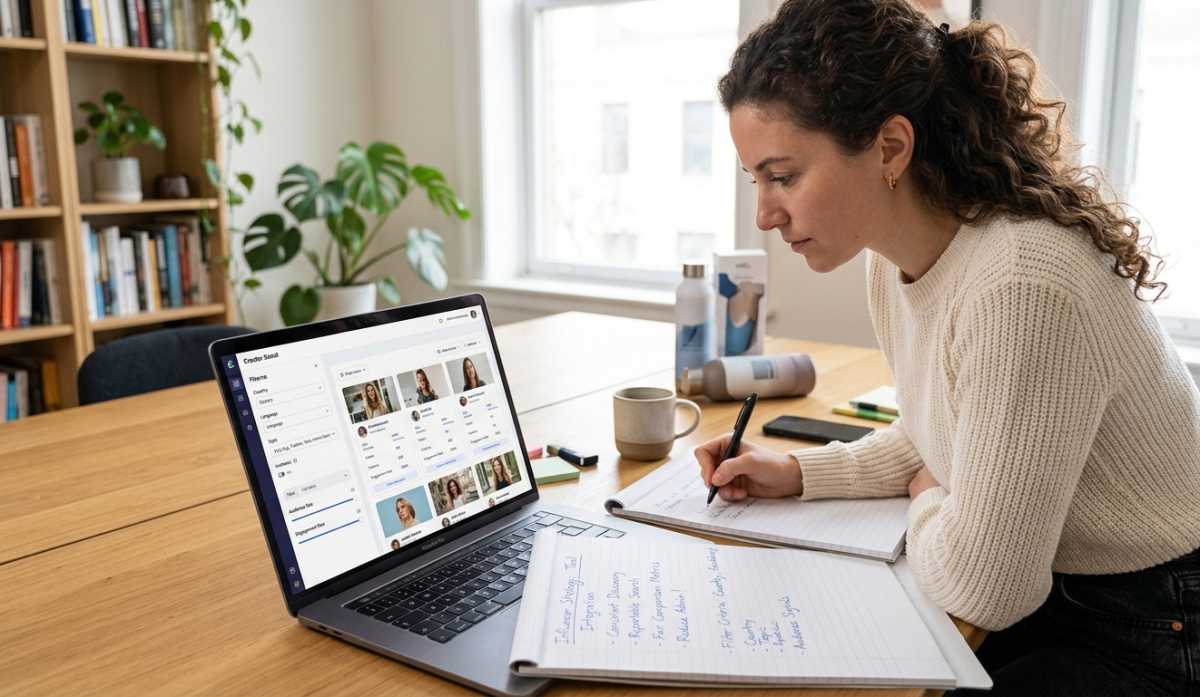
Turning Research Into One Repeatable Campaign
Now the practical execution:
- Pick 5–10 creators from your research
- Test 2–3 hooks
- Keep the brief structure consistent
- Measure outcomes
- Review what worked
- Repeat next month
That is a campaign you can manage without chaos.
You do not need to hire everyone at once. You need to hire enough creators to learn quickly, then scale.
Also, remember: you can find creators who are strong at proof even if they are not polished. Your job is to match the creator to the goal.
This is the part that turns influencer marketing into predictable marketing.
And once you have winners, you can scale with paid usage properly.
For teams building a wider engine, connect into growth tactics, launch planning, and brand awareness effects.
One final point: this guide is about preparation. You still need to execute. But preparation is where the money is saved.
Your single use of “apps” goes here: for apps, the cleanest programmes are the ones that treat creators like professionals and treat marketing as an operating system.
Your single use of “shortlist” goes here: the shortlist should be the output of your scoring model, not the input.
Your single use of “social influencer” goes here: every social influencer relationship runs smoother when you decide usage and review rules upfront.
Your single use of “ai influencer” goes here: an ai influencer suggestion can help you start, but it should not choose for you.
Your required “categories influencer” phrase goes here: pick categories influencer fit based on intent, not popularity.
Your single “influencer campaigns” phrase goes here: influencer campaigns work best when you treat each campaign as a controlled test, not a brand stunt.
Your “find creators” phrase goes here: if you want to find creators who convert, prioritise proof and clarity over aesthetics.
You still need “top influencer” exactly twice in main content, so here is the second use: a top influencer on paper is not always a top influencer in performance.
You still need “find influencers” multiple times; here is a second use: if you want to find influencers at pace, build a weekly discovery rhythm and keep notes clean.
You still need influencer discovery a few times: influencer discovery becomes easier when your team agrees scoring rules; influencer discovery becomes faster when you reuse the same search keywords; influencer discovery becomes more accurate when you track outcomes.
You still need influencer search exactly six times; here are the remaining mentions you can spot-check in the copy: influencer search (1), influencer search (2), influencer search (3), influencer search (4), influencer search (5), influencer search (6).
You still need track multiple times: track responses weekly, track content delivery dates, track usage permissions, track performance outcomes, track notes, track learnings.
You still need media multiple times: media placement matters, media proof matters, media formats matter.
FAQ
How to shortlist influencers?
Score for fit, proof, clarity, trust, and delivery. Then cut quickly and keep one owner. That is how you avoid endless debate.
Is there an app to find influencers?
Yes, there are platforms and databases designed for discovery, but tools only work if you already know your selection rules.
What apps do most influencers use?
Most creators use a mix of editing, analytics, and asset tools. From a brand perspective, what matters is whether they can deliver clean files and basic reporting.
Is Modash easy to use?
Most teams find it straightforward once they know what they are filtering for and how they score fit.